Church Financial Transparency: How Should Your Church Talk About Money and Giving?
Church Financial Transparency: How Should Your Church Talk About Money and Giving?
Most churches don't have a giving problem. They have a communication problem. I'd put money on it (no pun intended).
If people aren't giving the way you'd hoped, the issue is not usually their generosity. It's their trust.
People want to give toward a compelling mission. But that trust gets built or wrecked by how you talk about money.
Good church financial communication looks like this: giving is discussed openly, reported regularly through the year, and tied back to real outcomes. Your finances aren't hidden. They're not dumped into an annual PDF that nobody opens. They're presented to the congregation as a celebration of what you've achieved together.
Why Are Church Members So Suspicious About Money Now?
If it feels like people are more cautious about giving than they used to be, that's probably true.
Scandal after scandal involving mishandled church funds has done damage, and some of the people in your seats on Sunday have already sat in a church where money wasn't handled well. I've found this in our own church. Perhaps they're not cynical, but they are careful.
It's important to remember this though. People still want to give. They believe God's word when it says it's more blessed to give than to receive. Most people believe that and want to live it out.
Careful people are looking for evidence that their giving is going to matter, and proof that it will be handled properly once it's released to the church.
Finance is the muscle of mission
Finance is the muscle of mission. No vision has ever moved without money behind it. So asking your congregation to give toward what you're building together is a good thing, not something to apologise for.
5 Signs Your Church Communicates Well About Money
There are a few principles I've seen across churches we've worked with. Here's what happens when churches get this right.
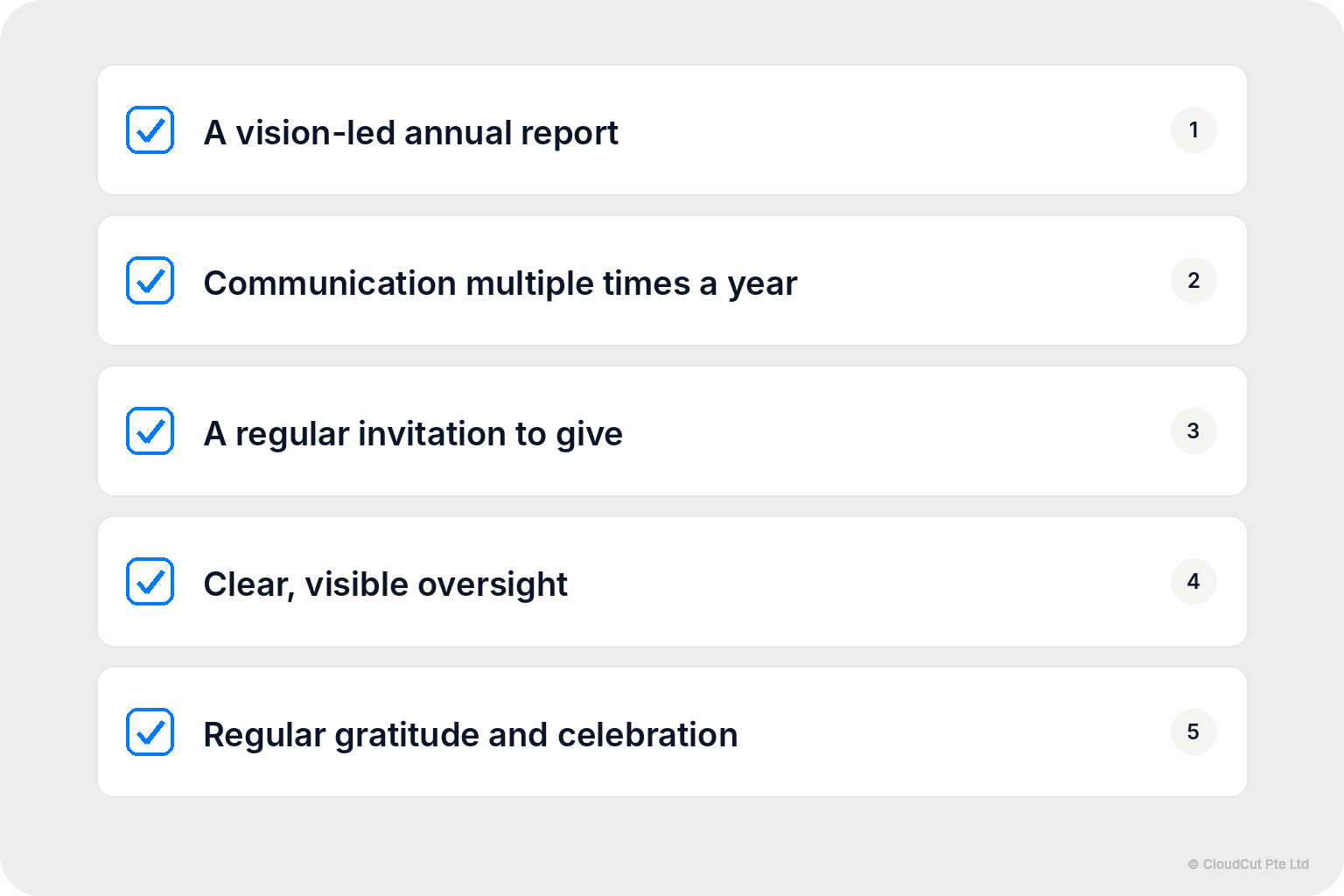
1. There's a vision-led annual report. Not a spreadsheet of numbers. A celebration of the year, including statistics, stories, and a clear breakdown of where the money went. Members need to see numbers and impact side by side, or the numbers mean nothing.
Members need to see numbers and impact side by side, or the numbers mean nothing.
2. Communication happens multiple times throughout the year. 4 times, minimum. A mention in a service. A short email. A video update showing how the money is making a difference.
3. There's a regular invitation to give. One church in Chicago does this well. They tell their congregation annually what could become possible if more people gave. "If X people tithed, we could start to fund Y." The open invitation lets careful people jump in at multiple points across the year, as and when they're ready.
4. Oversight is clear and visible. Members don't need every line item to study, but they need to know someone's checking the numbers. Naming your board of elders, or your church committee, even in one paragraph of the report, builds a lot of trust here.
5. Gratitude and celebration are regular. Not just saved up for moments where you need to raise a new offering. A weekly story in the service, or a milestone shared over social media, keeps your gratitude alive between annual reports.
Honesty Isn't the Same as Transparency
Most churches think they're being transparent when they're actually just operating on honesty. I think they're different things. Honesty means you won't lie if someone asks. Transparency means you actively put the information in front of people before they have to ask.
Your church can be entirely honest, and still feel opaque to the people sitting in it.
Maybe you didn’t intentionally hide anything, but you didn’t offer much, either.
Maybe your report is buried on page 6 of the website, and unless someone goes looking for it, they'll never find it.
Or you give the numbers a quick mention on a Sunday, but never put them down in writing and send them out.
If that's the case, your church might unintentionally be communicating badly. And that will be affecting your giving.
So how do you build trust with regular communication?
The Trust Loop: How to Talk About Money in Church, Year-Round
We talk about this framework with the churches we work with.
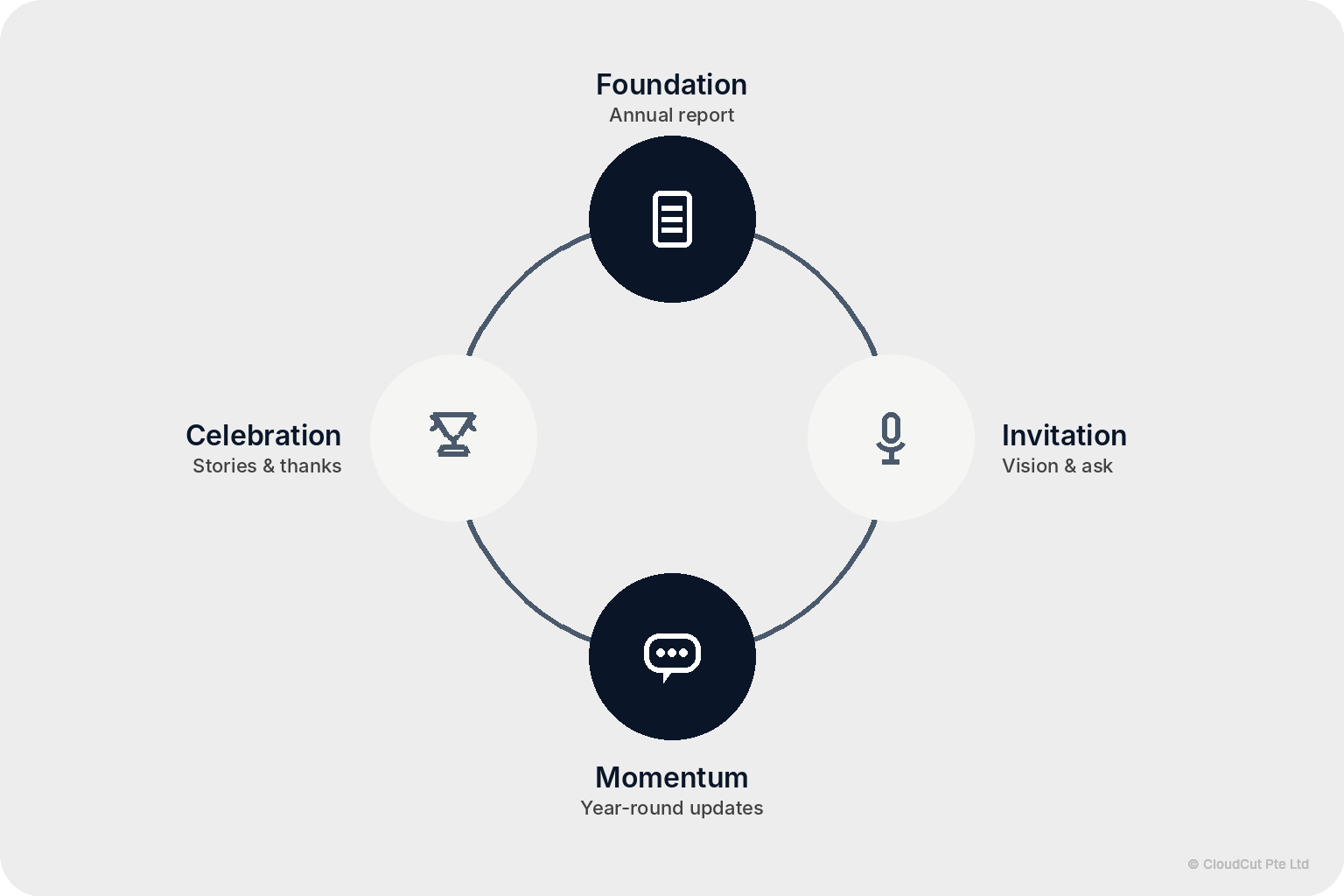
The Trust Loop is 4 phases, repeated every year, that turn your money communication into an ongoing rhythm of trust rather than a single annual disclosure.
- Foundation. Your annual report. The statistics, the big numbers, the budget breakdown, your board oversight, the wins and the shortfalls, told through data and storytelling together. Everyone can see this, whether they give or not.
- Invitation. Your call to give. Maybe it's your annual Vision offering, or a regular missions weekend. This sits on top of the trust you've just built with your annual report. Cast your vision here. Show the church what's possible. Lead with the future, not the gap.
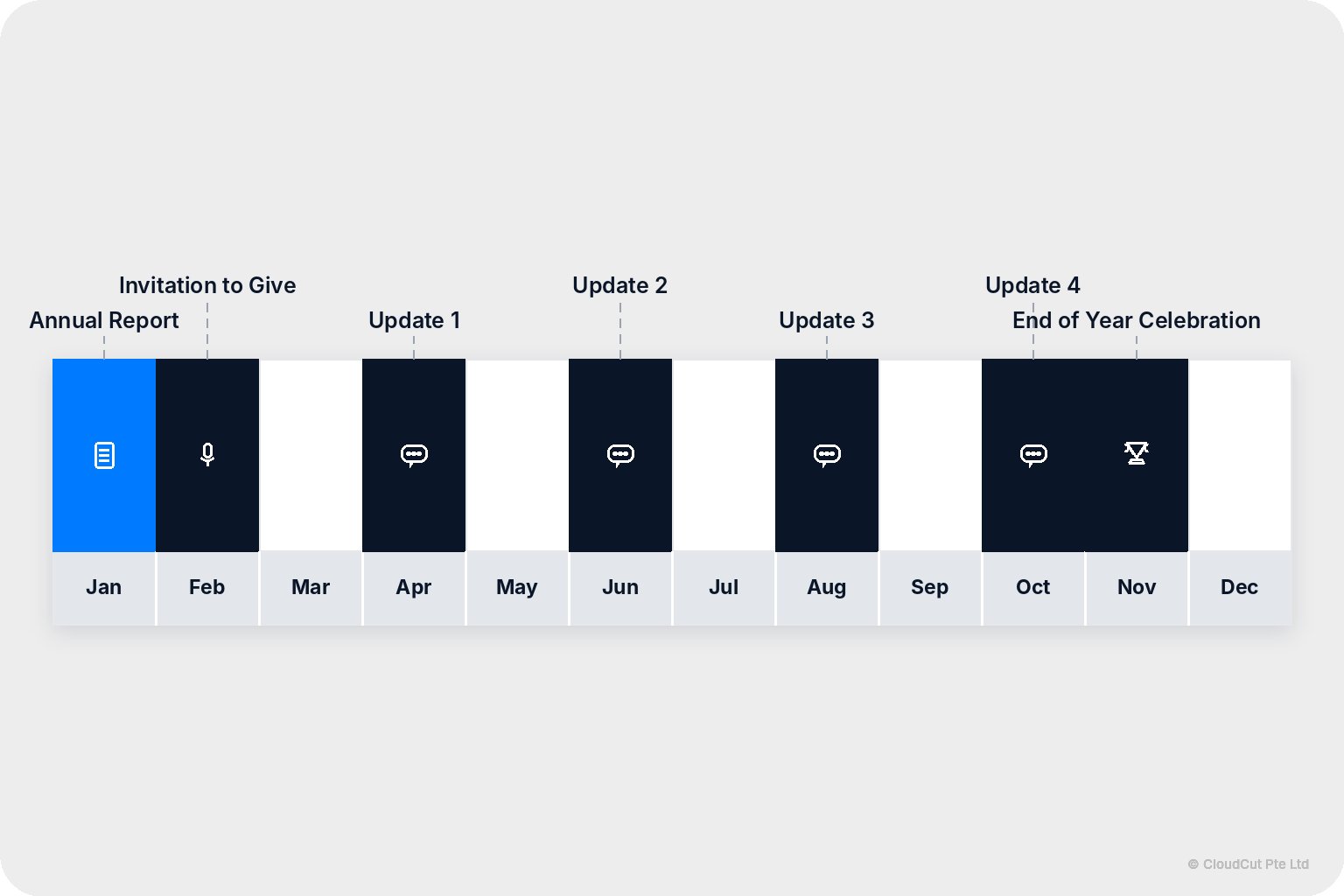
- Momentum. Keep engagement alive. The work continues after the money's raised. At least 4 touchpoints through the rest of the year, told through services, emails, or video updates. Stories, statistics, quick check-ins on progress. This is what keeps engagement with your vision alive.
- Celebration. Mark the moment. Before the loop starts again, look back. Tell the stories, show the proof of what the giving actually did. Close it emotionally, put a full stop on it, before you open the next offering.
This is the communications loop that builds trust.
Here's what that could look like across a calendar:
Should Everyone Get Access to the Numbers?
I once heard a rule from Carey Nieuwhof that I've used often: the most information goes to the most invested people.
Not everyone gets every line item, and they shouldn't. You don't hand granular financial detail to someone who's never given, served, or stepped into anything themselves. But the more someone invests, the more they should be able to see. People with skin in the game get to see more of how the game's played.
What This Looks Like in Real Churches
C3 SYD built a great communications strategy around their Vision Builders campaign, organised around 3 giving pillars, each backed by its own compelling vision video and story, with live on-stage reporting tied back to each pillar individually. We supported them through that process, which helped build trust with their congregation.
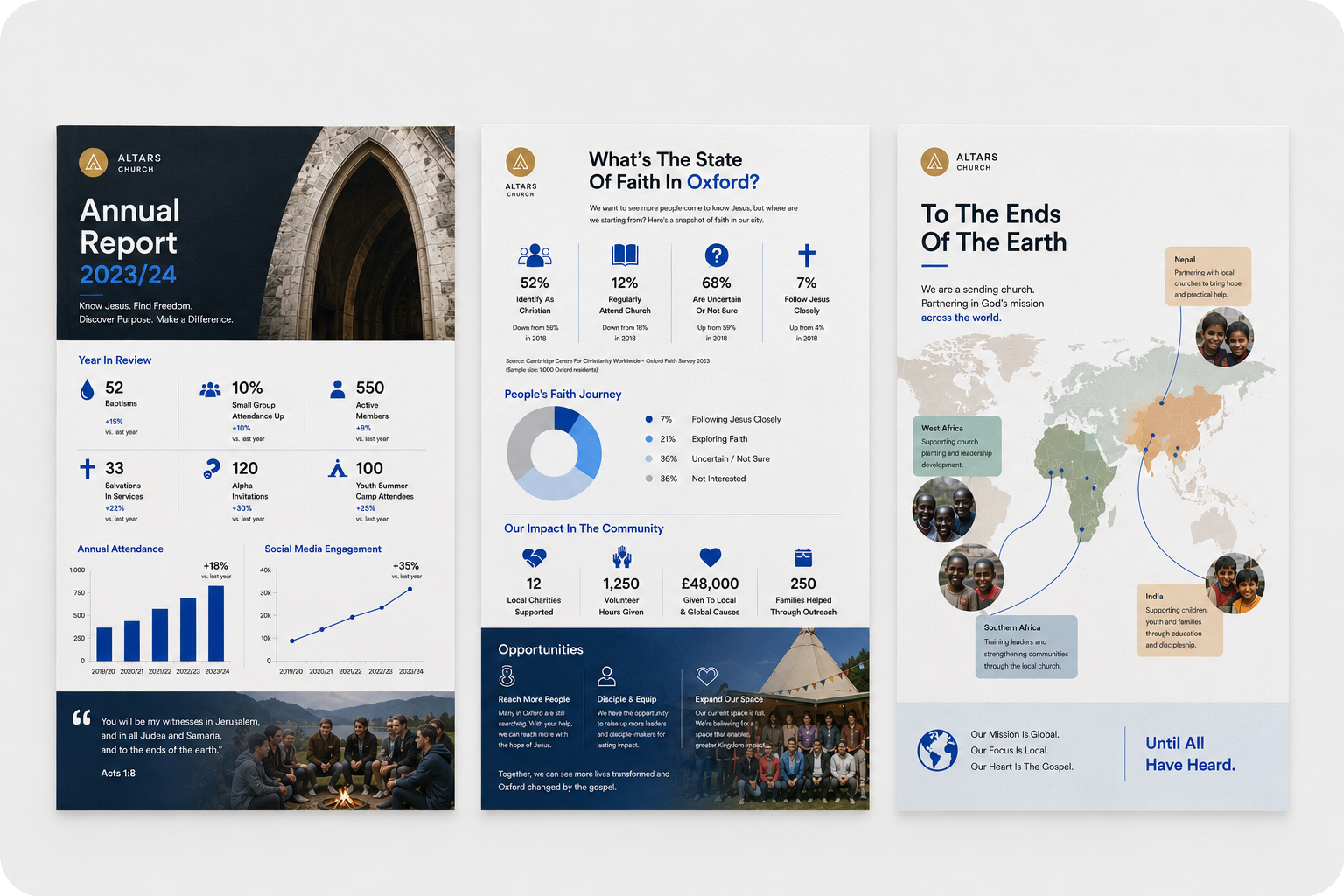
We worked with a church in London this year to create a vision-led annual report. They included storytelling, how many people were baptised, how many came to faith through Alpha, how many engaged with small groups and discipleship. The result was tangible evidence of transformation, not just a statement of where the money went.
And in my own church, we sent a small crew to Cambodia to film one of our partner churches, as part of our Vision offering, and turned that footage into a story for our congregation to watch. It gave people proof their money actually went somewhere, living evidence that generosity given locally was doing something thousands of miles away.
How I Handle This in My Own Church
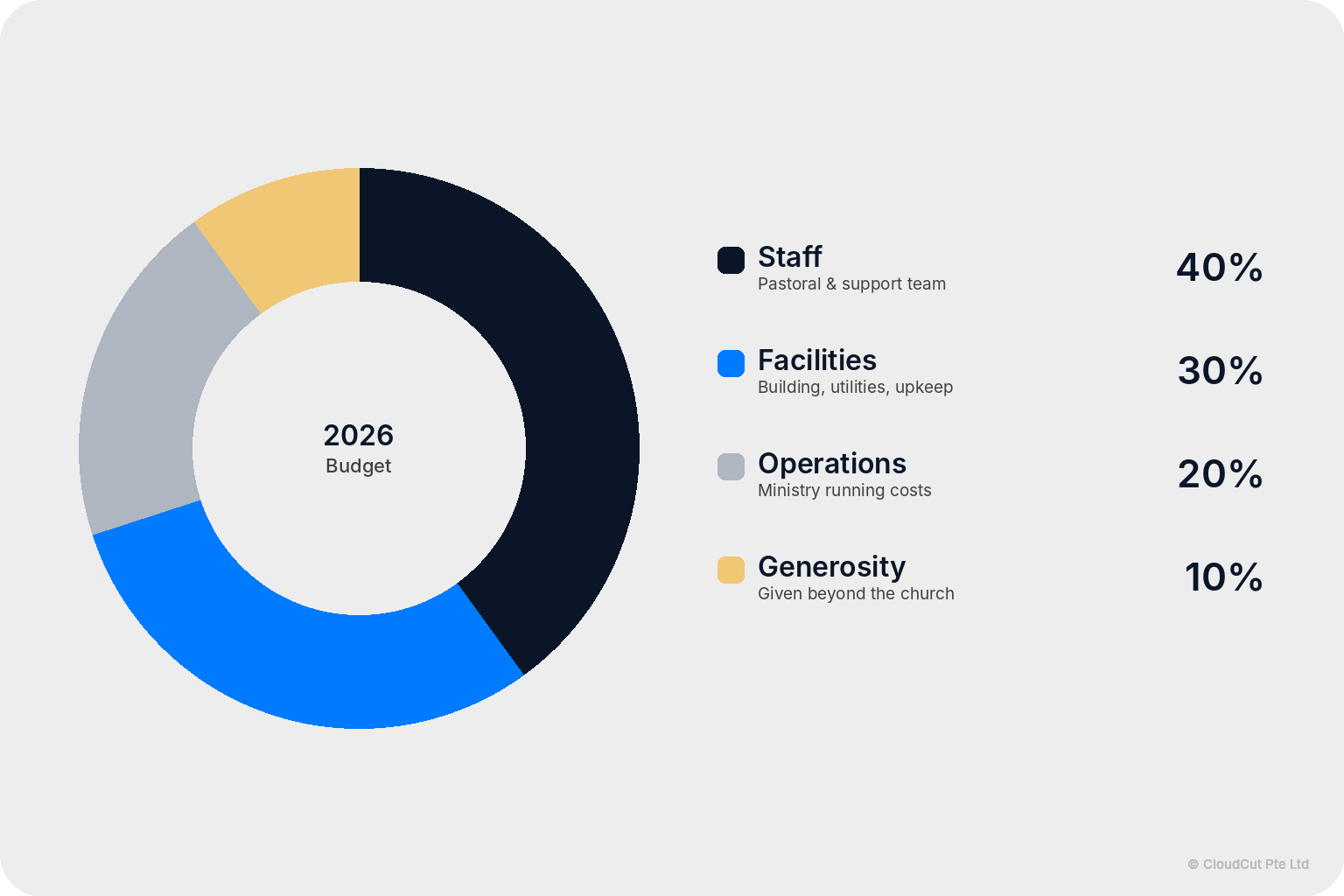
I still lead a church week to week, and one of the things we've found helpful is our budgeting strategy. We communicate that we aim to spend 10% on generosity, 20% operations, 30% facilities, 40% staff. Our annual report shows the church exactly how we're tracking against those numbers.
Although we're not legally required to audit, given our size under local law, we do it anyway, every year. Purely so nobody has to take our word for it, they can trust an external professional firm to look at every line of spend instead.
My honest take: if talking about money feels awkward to you, that awkwardness might be why your giving is struggling. Whether you're a pastor or a vicar, the instinct to avoid the topic costs you the same either way.
If you're going to ask people to give, you owe them the same energy showing where it went. Bring it into the light.
How Long Does a Proper Annual Report Actually Take?
We build a number of annual reports through CloudCut every year. How long do they take? About 65 hours, on average. You read that right.
We go back and forth with finance teams, church leaders, and our storytelling team until the numbers and the story actually line up, not just sit next to each other.
What format should they take? There's no single answer. We've built these as:
- Interactive web pages
- Shareable PDFs
- Short one-pagers
- Printed brochures
- Full video reports
Format matters less than you'd think. What matters is knowing how to frame vision properly. The leaders willing to spend the time on this end up with stronger giving and higher trust. Every time.
Frequently Asked Questions
How often should a church communicate about money? Once a year minimum through a proper annual report, plus 3 or 4 shorter updates spread across the rest of the year. Going silent between reports is one of the fastest ways to create suspicion.
How do you announce annual giving without it feeling like a guilt trip? Lead with vision. Show what becomes possible if more people give, rather than only pointing at what's missing. Teach what the Bible says about generosity before the ask, not during it.
Should a church disclose individual staff salaries? Most churches we work with don't, though some details may already be visible through Charity Commission reporting or equivalent bodies. What matters more is showing the percentage of budget going to staffing overall, and being upfront about a commitment to pay fairly and generously within that.
What's the actual difference between honesty and transparency in church finances? Honesty is not lying if someone asks. Transparency is actively putting the answer in front of people before they ask. A church can be fully honest and still be opaque in how it communicates giving.
Does a small church need to get audited? That depends on the laws where you are and how much you bring in. But if you can, do it anyway. Even below the legal threshold, a full audit is one of the most affordable ways a church can build trust with its members.
Why don't people trust churches with money the way they used to? Public scandals have done real damage, and plenty of people carry scars from previous churches that handled money badly. Trust isn't assumed anymore. It has to be earned, and then earned again.
Want Help Getting This Right?
If your church is heading into an annual offering or trying to fix how you talk about money, you don't have to figure this out alone.
Our team at CloudCut has helped churches around the world build their annual reports and giving campaigns.
If you want help building it, CloudCut Studio is our ongoing creative partnership for churches. We build your brand identity and system, produce your series lookbooks, and then show up every single week to create the content your church needs to show up with clarity online.
More Articles
Read more articles from the journal




Free Church Communications Audit: See How Your Church Scores
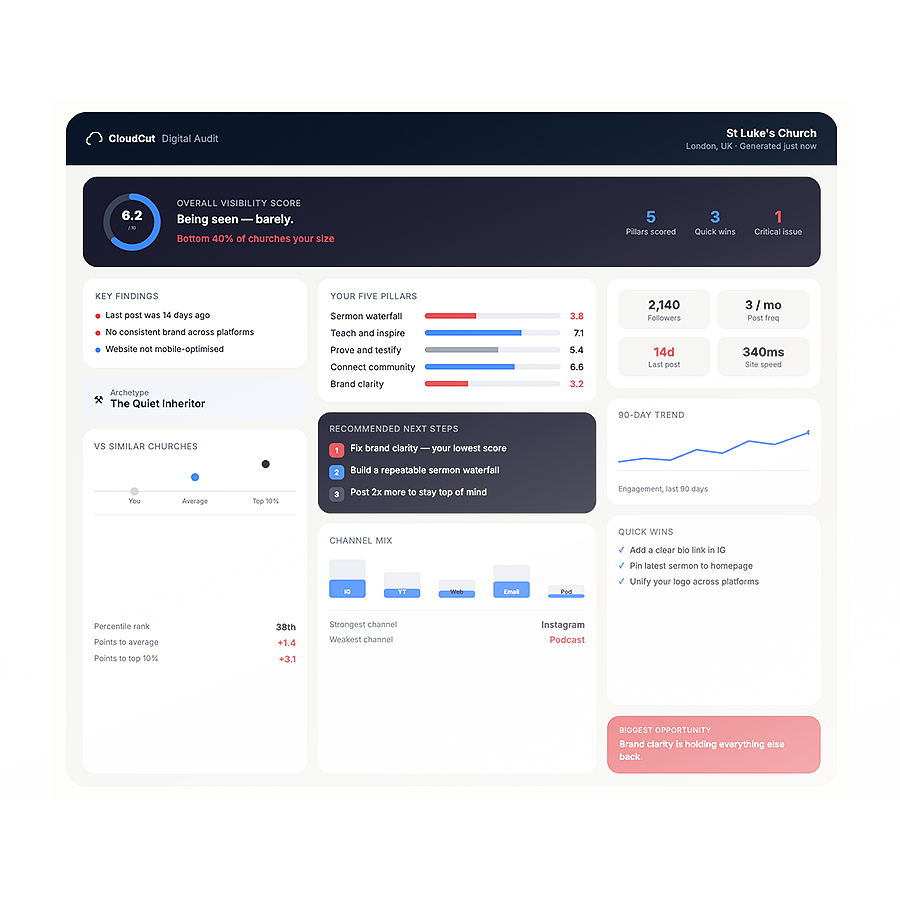
In under 2 minutes, get an AI-powered report on how your church currently ranks online, what's holding you back, and some practical next steps.
Get clarity today. Book a call.
A 30-minute Clarity Call with Joel and the team. We'll talk through where your church is at and whether we could help.