Stop Copying Other Churches: How to Uncover Your Church's Core Identity
How To Uncover Your Church's Core Identity
Here's something that might make you uncomfortable.
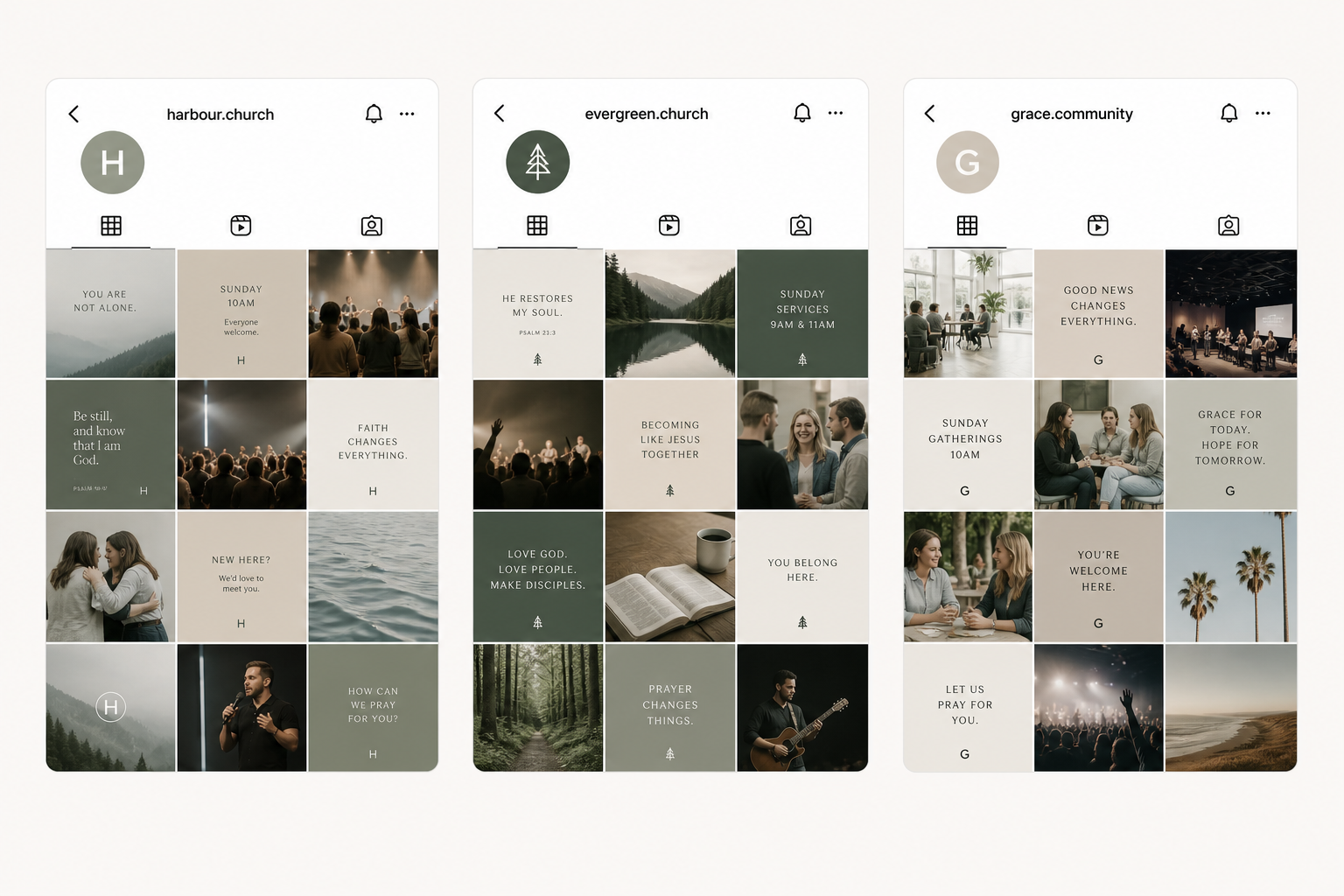
Pull up your church's Instagram. Compare it to HTB, or Gas Street, or Elevation.
Does your church look like you? Or does it look like a version of them?
If you paused before answering, you're not alone.
And this isn't a small church problem, or a resource problem. Some of the churches I see struggling with this have talented teams, big budgets, and genuine passion for what they're doing. They've studied HTB, watched every Elevation video, taken notes on what Gas Street and Mosaic have built.
And the result, despite all of that effort, is a church that looks like every other church.
We call this the Church Identity Crisis. And it's more common than anyone wants to admit.
We All Start By Copying
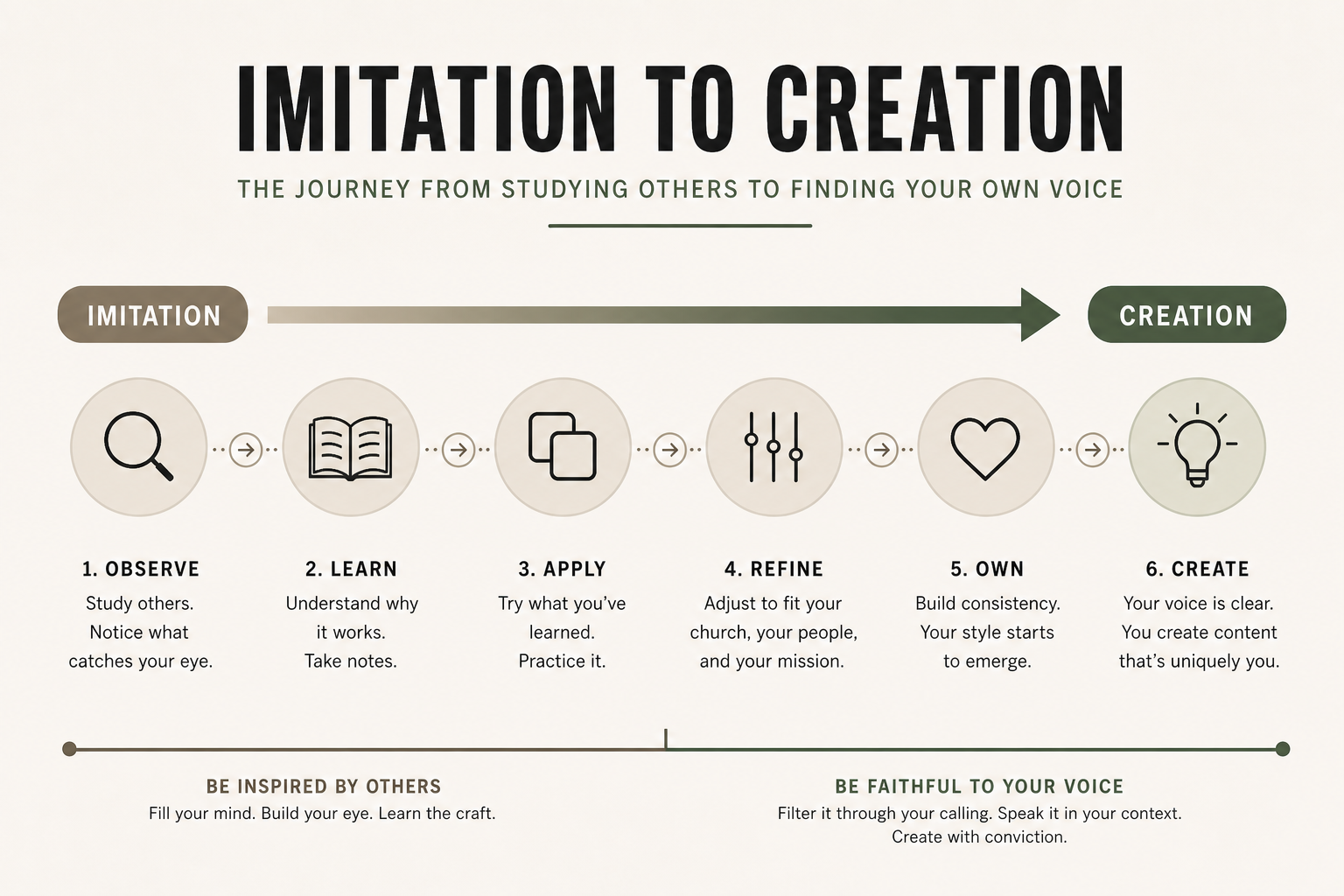
Before we get to the fix, it's worth saying that copying isn't laziness. It's actually where every creative journey starts.
Think about how a child learns to speak. They don't invent languages from scratch. They listen, repeat, and imitate the people around them. And gradually, through that imitation, they start forming their own voice.
Erwin McManus, whose church Mosaic is one of the most creatively distinctive in the world, has said that an authentic creative journey begins with imitation. He's right. Looking at what HTB, Saint, and Gas Street have built is how you learn what good looks like and why it works.
The problem isn't that you were inspired by them. The problem is that you never moved beyond it.
Every great creative journey moves in one direction: imitation first, then creation. At some point you have to stop speaking in someone else's voice and start speaking in your own. And from what we see working with churches across the UK, most churches never make that transition. Not because they can't. But because nobody ever sat them down and helped them find their own identity.
What the Church Identity Crisis Is Actually Costing You
This isn't just an aesthetic problem. A borrowed identity has real consequences.
It confuses your congregation. When your visuals and tone are borrowed from somewhere else, the people in your church can feel it. It doesn't represent them or the culture of what God is building among you. Over time, people struggle to articulate why they love your church - because the outside doesn't match the inside.
It loses visitors before they arrive. Four in five people check a church online before they visit. If everything you put out looks and sounds like every other church in their feed, you blend into the noise. The people you're specifically called to reach scroll straight past.
It robs your church of its God-given distinctiveness. This is the biggest cost of all. Every local church has a specific people it's called to reach. A neighbourhood. A demographic. An expression of the Gospel that it carries in a way no other church does. A copied identity quietly blocks all of that from being seen.
The Church Identity Crisis isn't a design problem. It's a clarity problem.
The One Question Every Great Church Brand Is Built On
Here it is.
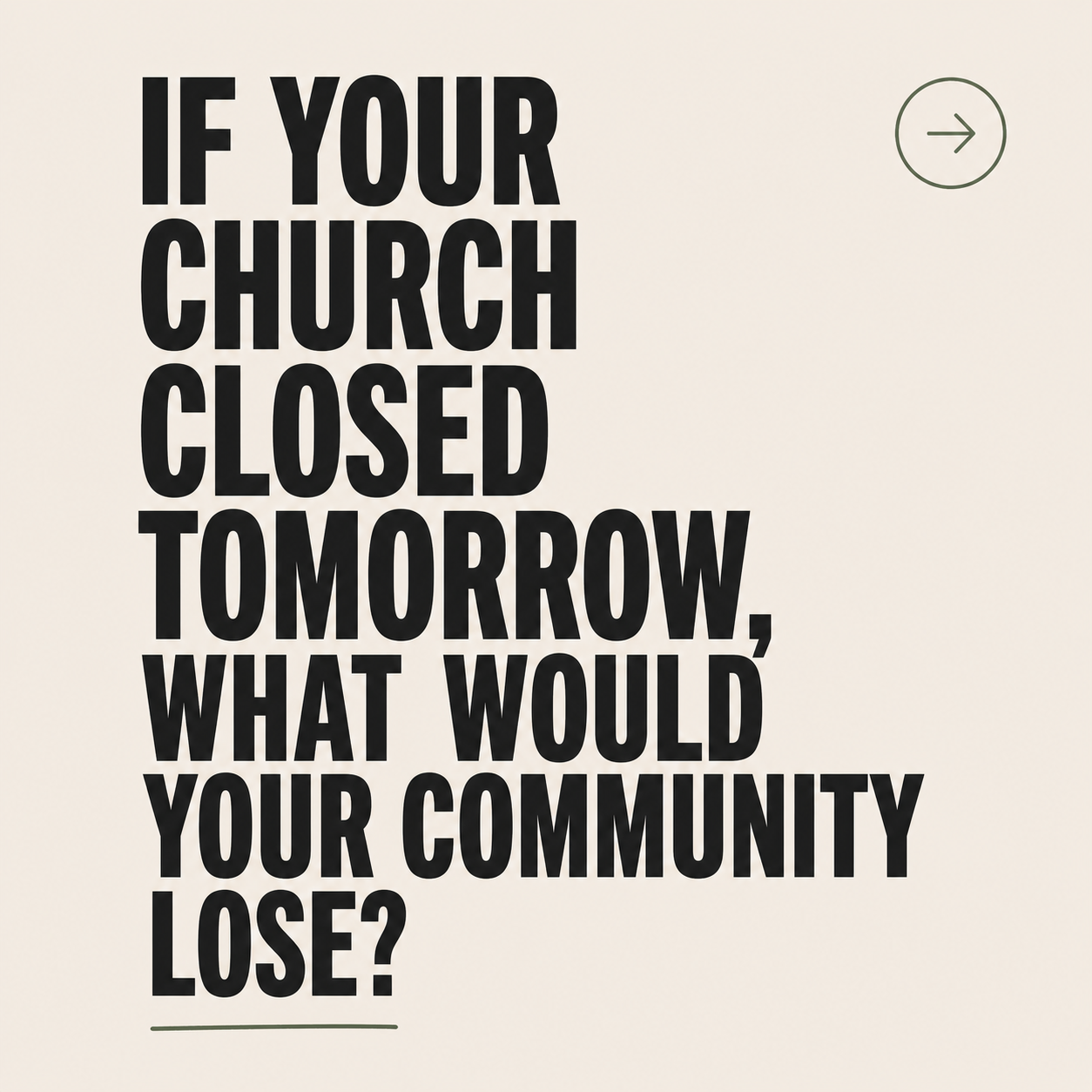
If your church closed tomorrow, what would your community lose?
Not your congregation. Not your members. The neighbourhood. The people who have never walked through your doors.
Not "a good church" or "a place to worship." Something specific. Something that only your church does, in the way that only your church does it.
For some churches, it's a particular demographic they've built genuine trust with. Young professionals in a specific part of the city who wouldn't walk into any other kind of church. For others it's a way of doing community that is genuinely rare in their area. For others it's a specific neighbourhood they've been serving for decades, and the needs of those people are woven into the fabric of everything they do.
That thing - whatever it is for your church - is your unique identity. It's the story of what God is doing among you that isn't happening anywhere else in quite the same way.
And when you can name it clearly, everything else suddenly has a foundation.
Why This Question Is Hard to Answer
Simple to ask. Not simple to answer.
And there are three reasons most leaders struggle with it.
You're too close to it. When you're inside the church every day - leading, preaching, pastoring - the things that make your church genuinely distinctive feel ordinary to you. Because you live inside them. This is why the best answers often come from the newest people in the room. Ask them what made them choose to stay. What they found here that they hadn't found anywhere else.
You're afraid of the answer. A specific identity means you're not for everyone. And for a church leader, that can feel wrong. But here's the truth: Jesus was for everyone and he still ministered in specific places, to specific people. Being clear about who you are isn't rejecting anyone. It's a clearer invitation to the people you're specifically designed to reach.
Nobody has ever properly asked you. This is the most common reason of all. Not in a way that made space to actually think it through.
The One-Hour Identity Exercise
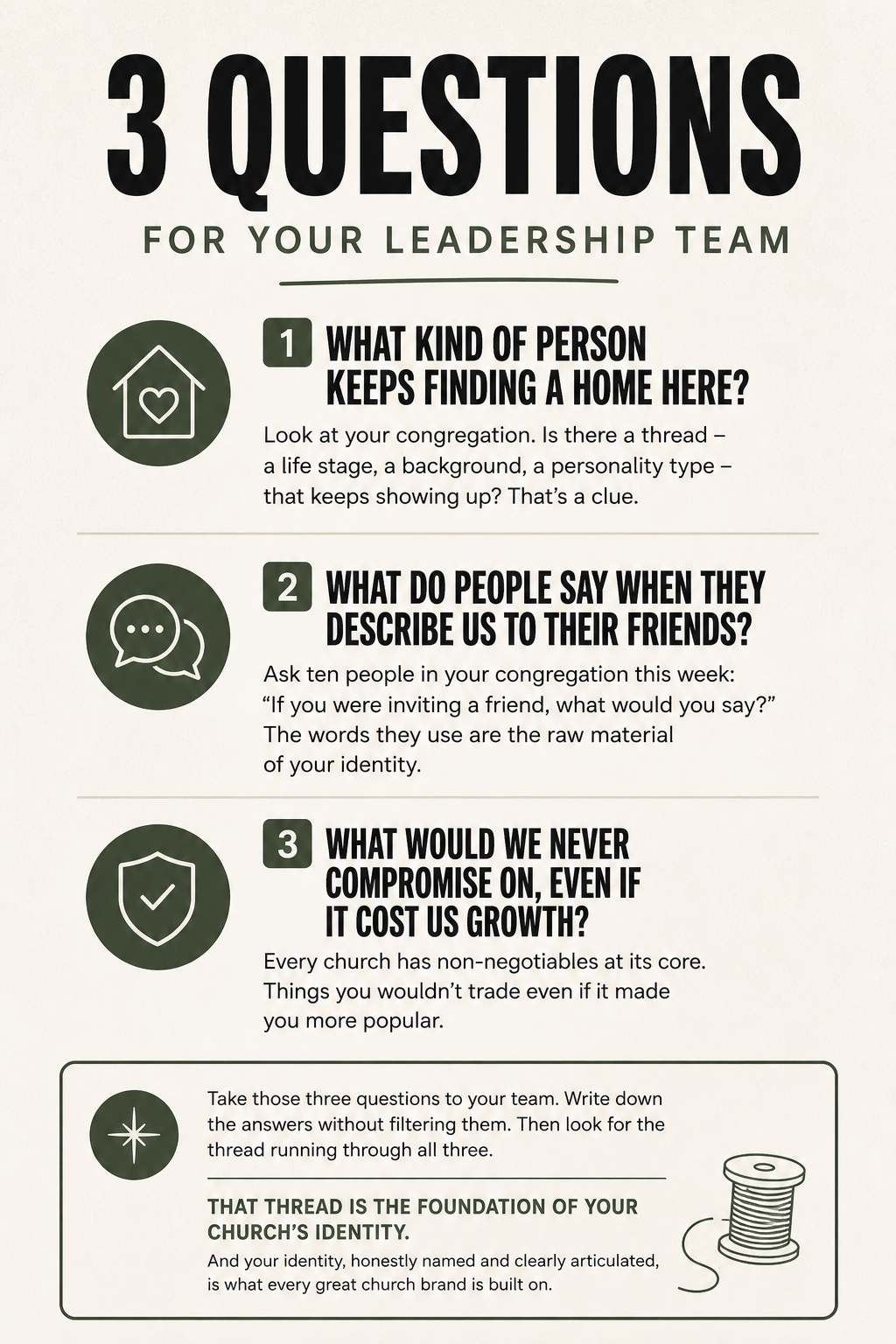
Here's a simple exercise you can take to your leadership team this week.
Question 1: What kind of person keeps finding a home here?
Look at your congregation. Is there a thread - a life stage, a background, a personality type - that keeps showing up? That's a clue.
Question 2: What do people say when they describe us to their friends?
Ask ten people in your congregation this week: "If you were inviting a friend, what would you say?" The words they use are the raw material of your identity.
Question 3: What would we never compromise on, even if it cost us growth?
Every church has non-negotiables at its core. Things you wouldn't trade even if it made you more popular.
Take those three questions to your team. Write down the answers without filtering them. Then look for the thread running through all three.
That thread is the foundation of your church's identity. And your identity, honestly named and clearly articulated, is what every great church brand is built on.
Watch the Full Training
If you want to go deeper on this, I made a free training video walking through the whole Church Identity framework on the CloudCut YouTube channel.
It's about 10 minutes and it's probably the most practically useful thing we've made for church leaders who feel stuck on this:
[Watch the Free Training on YouTube →]
Ready to Uncover Your Church's Core Identity?
Remember, the churches you admire don't look the way they look because they copied someone else.
They look that way because they did the hard work of figuring out who they actually were.
Your church has a strong identity. It just needs uncovering.
If you want help doing that properly, CloudCut Launch is a full brand process built from your identity up. We help you find what makes your church genuinely different, put it into words, and build a visual identity that finally looks like you.
More Articles
Read more articles from the journal



Free Church Communications Audit: See How Your Church Scores
In under 2 minutes, get an AI-powered report on how your church currently ranks online, what's holding you back, and some practical next steps.

Get clarity today. Book a call.
A 30-minute Clarity Call with Joel and the team. We'll talk through where your church is at and whether we could help.